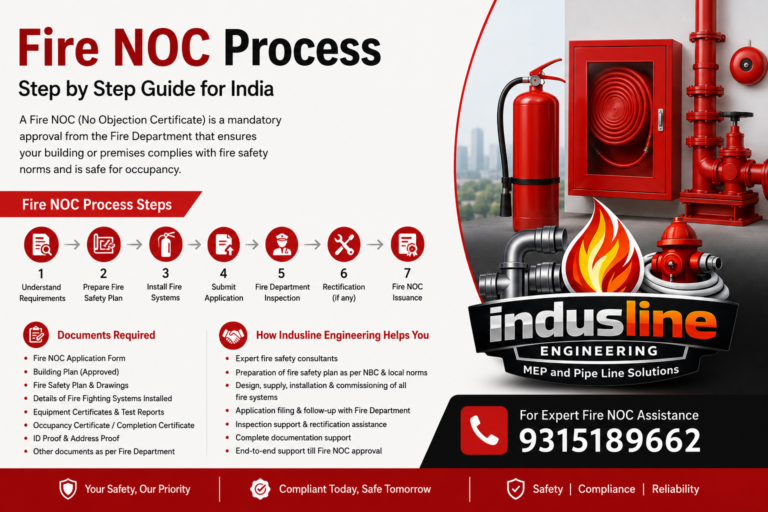
Fire safety is not just a legal requirement — it is a responsibility toward protecting lives, infrastructure, and business operations. Whether you manage an industrial unit, commercial building, or residential project, upgrading your fire safety systems is essential to reduce risk and ensure long-term protection.
At Indusline Engineering, we provide reliable pipeline and fire safety solutions tailored to modern safety standards. This blog is designed to educate clients on fire safety essentials and highlight important upgrades that can strengthen safety across their facilities.
Why Fire Safety Is Critical for Every Facility
Fires can occur due to electrical faults, flammable materials, overheating equipment, or human error. Without proper detection and control, a small incident can escalate into a major disaster.
A well-designed fire safety system helps to:
- Protect human life and property
- Minimize operational downtime
- Reduce financial loss
- Meet statutory and insurance requirements
Preventive fire safety planning is always more effective and economical than post-incident recovery.
Essential Elements of an Effective Fire Safety System
Fire Detection and Alarm Systems
Early detection is the foundation of fire safety. Modern fire alarm systems can identify smoke, heat, or flame at an early stage and provide immediate alerts.
Recommended upgrades include:
- Addressable fire alarm systems
- Multi-sensor smoke and heat detectors
- Centralized alarm monitoring
These upgrades improve response time and reduce false alarms.
Fire Suppression Systems
Fire suppression systems are designed to control or extinguish fire before it spreads.
Common solutions include:
- Automatic sprinkler systems for industrial and commercial spaces
- Foam-based systems for fuel and chemical risk areas
- Clean agent systems for electrical rooms and data centers
Regular inspection and maintenance are critical to ensure system reliability.
Fire Fighting Pipelines and Hydrant Systems
A well-planned fire fighting pipeline network allows quick manual intervention during emergencies. Hydrants, hose reels, and valves must deliver sufficient water pressure at all critical locations.
Key considerations include:
- Use of durable, corrosion-resistant piping
- Strategic hydrant placement across large facilities
- Easy access for fire service personnel
Emergency Lighting and Exit Signage
During a fire, power failures and smoke can cause panic and confusion. Emergency lighting and exit signage guide occupants safely out of the building.
Best practices include:
- Battery-backed emergency lights
- Clearly visible exit signs
- Regular functional testing
Fire Safety Audits and Training
Even the best systems require trained personnel to operate them effectively. Fire safety audits help identify system gaps, while training ensures preparedness.
Recommended actions:
- Periodic fire safety audits
- Scheduled fire drills
- Basic fire extinguisher training for staff
Modern Fire Safety Upgrades Clients Should Consider
Advancements in technology have improved fire prevention and monitoring capabilities.
Smart fire detection systems allow real-time alerts and remote monitoring.
Thermal imaging helps identify overheating equipment before ignition occurs.
Integrated building management systems connect fire safety with security and ventilation controls for faster response.
These upgrades provide proactive protection rather than reactive response.
Conclusion
Fire safety is not just about meeting regulations — it is about creating a secure environment for people and assets. Regular upgrades, proper maintenance, and professional system design significantly reduce fire risks.
Indusline Engineering is committed to delivering high-quality pipeline and fire safety solutions that align with safety codes and client requirements. Our expertise ensures dependable systems that protect what matters most.
For professional fire safety consultation, system upgrades, or pipeline solutions, connect with Indusline Engineering today.